
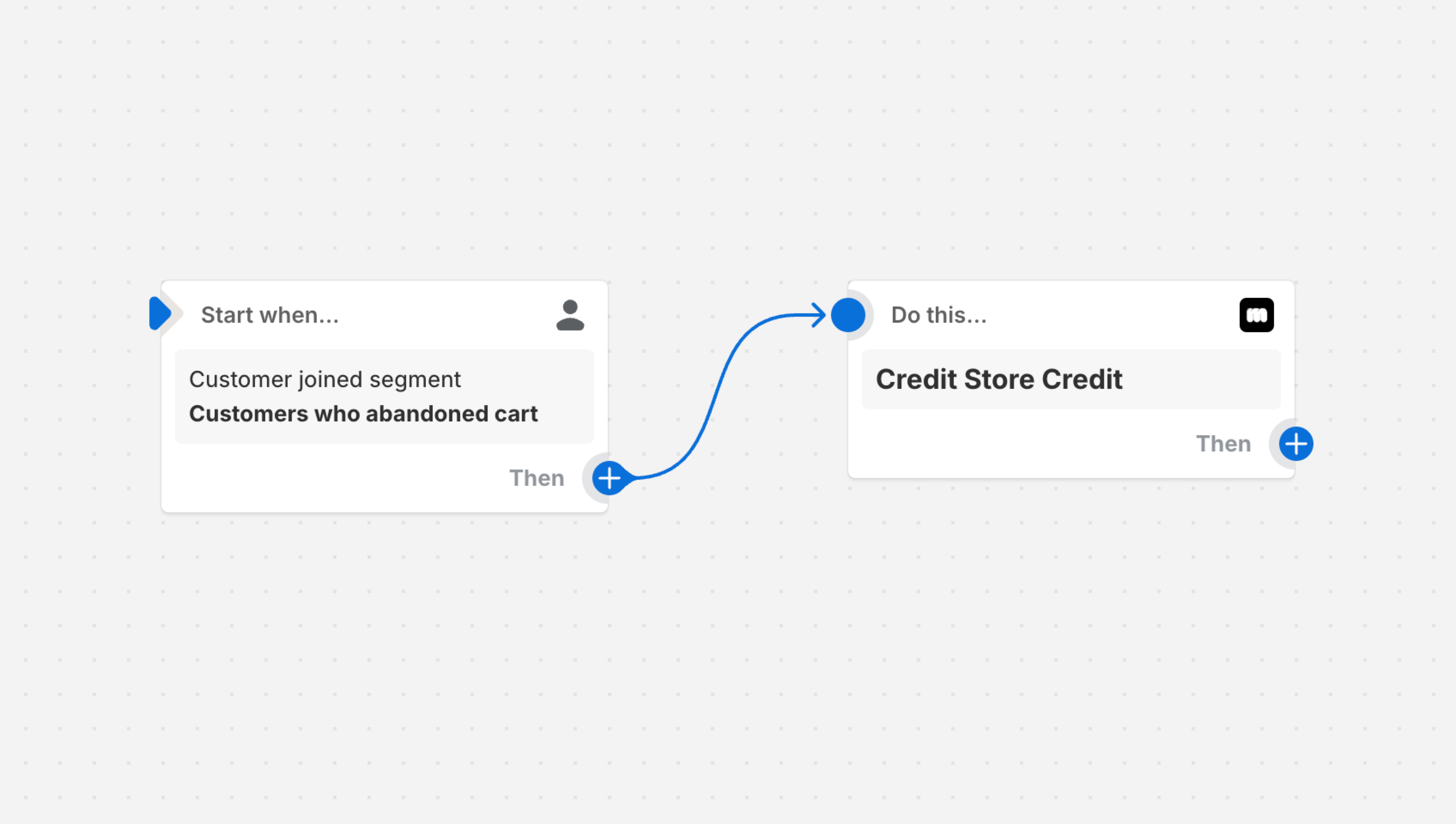
Shopify Flow automates store credit issuance based on triggers. A customer abandons checkout → Flow issues $5 credit. A customer leaves a review → Flow rewards them.
The risk: bad automation leaks margin. Credit with no delay, no caps, no exclusions trains customers to game the system (abandon cart → get credit → repeat).
This article covers three safe recipes, plus guardrails that protect margin.
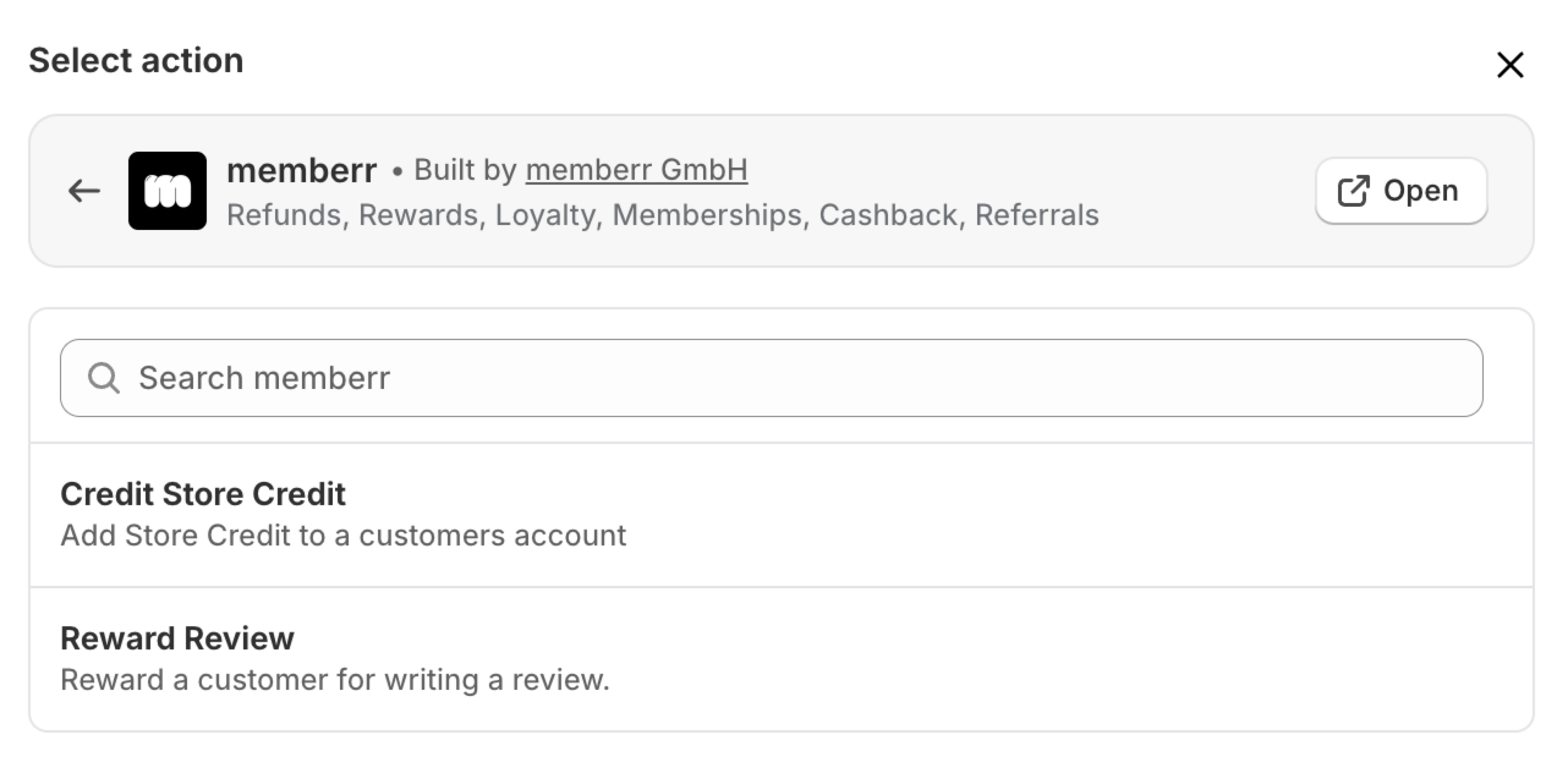
memberr Flow Nodes
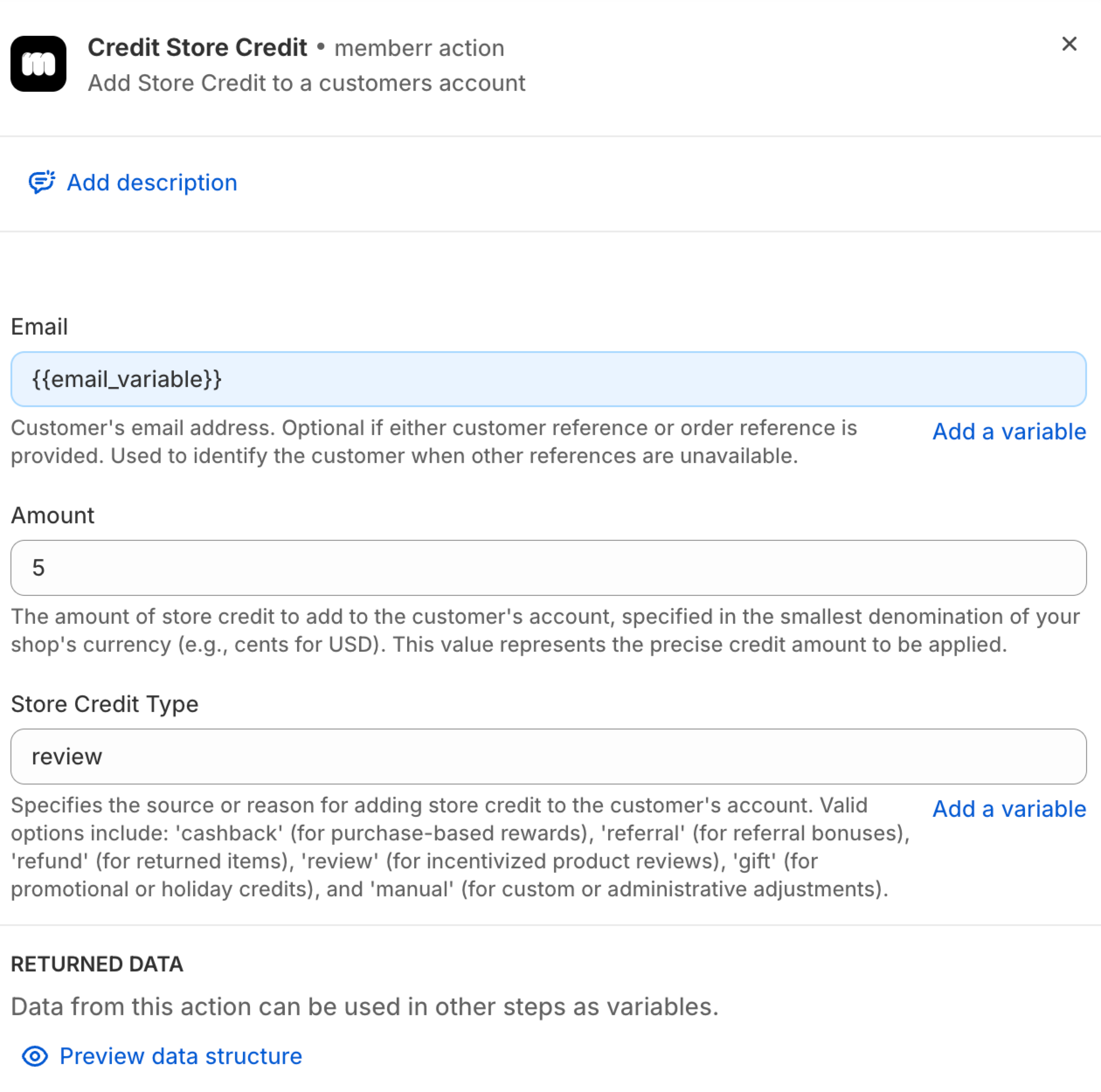
1. Credit Store Credit
Issues credit to a customer. Configure amount, email, credit type (cashback, referral, review, gift, manual).
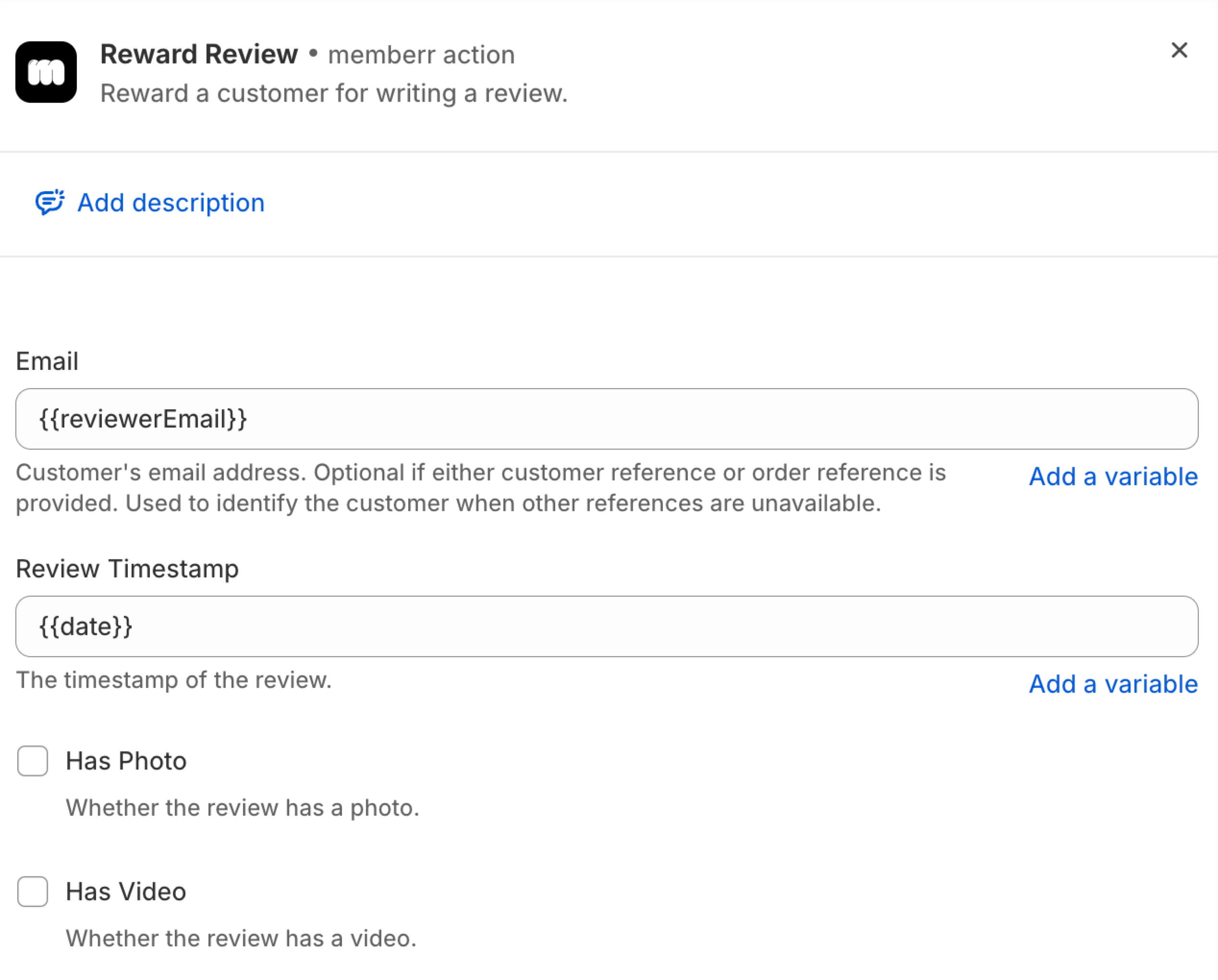
2. Reward Review
Issues credit specifically for reviews. Detects if review has photo or video and adjusts amount accordingly.
Docs: Shopify Flow Integration
Recipe 1: Abandoned Checkout Recovery
Trigger: Customer joined segment (abandoned checkout in last 7 days).
Action: Credit $10 store credit, expires in 14 days.
Flow:
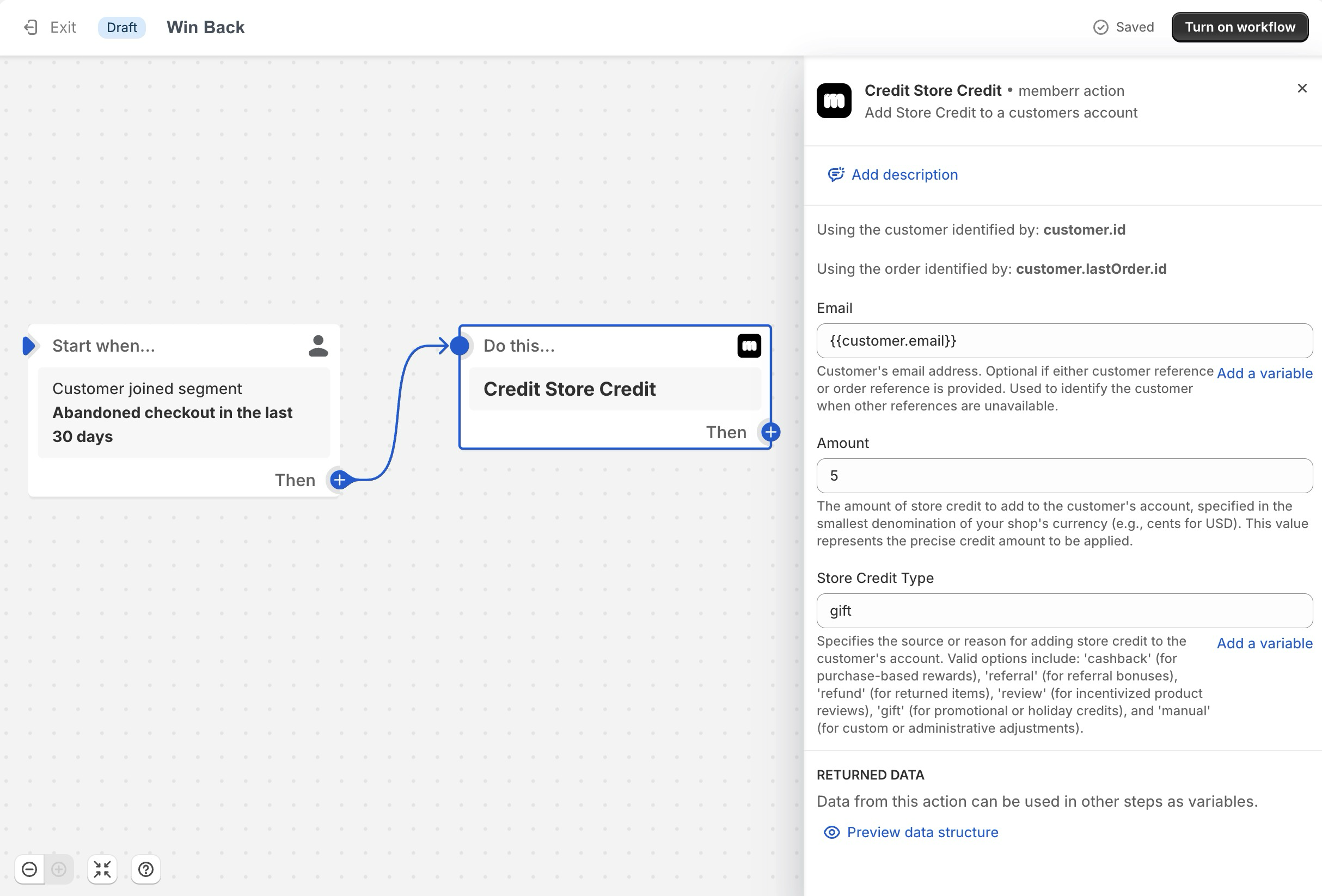
Why it works:
Abandoned checkouts are high intent. $10 credit removes price friction.
Guardrails:
1. Segment conditions:
- Cart value > $50 (don't reward low-value abandons)
- First abandon (exclude repeat abandoners who game the system)
- Not already a customer (or LTV > $200 if existing)
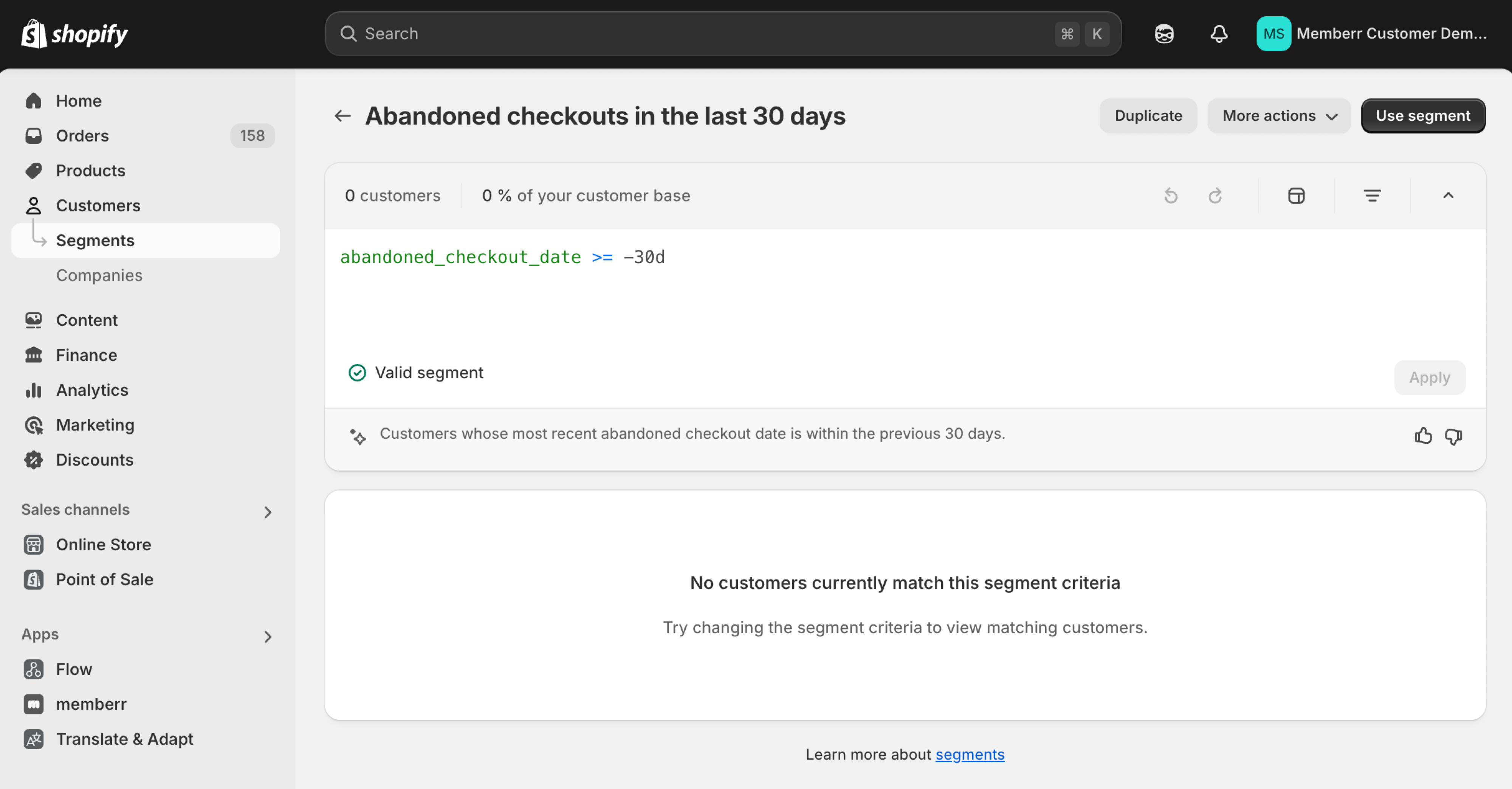
2. Delay:
Wait 24 hours before issuing credit. Immediate credit trains customers to abandon intentionally. 24-hour delay means credit arrives after they've forgotten - feels like a "win-back" gift, not a reward for abandoning.
3. Expiry:
14 days. Short expiry creates urgency and prevents stockpiling.
4. Caps:
Limit to 1 credit per customer per 90 days. Prevents abuse.
Cost:
If 20% of abandoners redeem $10 credit, cost per reactivation = $2. Compare to $30-50 CAC for cold ads. Cheaper.
Recipe 2: Review Rewards
Trigger: Customer submitted review (via Judge.me, Reviews.io, Loox, etc.).
Action: Reward with store credit based on review type.
Flow:
Trigger: Review submitted (app-specific event)
Condition: Review is verified purchase
Action: memberr "Reward Review" node
- Has Photo: Yes/No
- Has Video: Yes/No
memberr automatically adjusts amount:
- Text review: $5
- Photo review: $10
- Video review: $20
(Configure amounts in memberr app > Settings > Reviews.)
Why it works:
Reviews drive conversion. Incentivizing with credit (not discounts) keeps margin intact and brings reviewers back for another purchase.
Guardrails:
1. Verified purchases only:
Only reward reviews from actual buyers. Filter out non-buyer reviews to prevent abuse.
2. One reward per product per customer:
Prevent customers from leaving 10 reviews on the same product for $50 credit.
3. No expiry (optional):
Review credit can be evergreen - the goal is social proof, not urgency. If customer uses it 6 months later, that's fine (they're still a repeat buyer).
4. Review moderation:
If your review app allows, only reward after review is approved (not just submitted). Filters out spam.
Cost:
If 15% of customers review and earn $10 average, cost per review = $10. If one review helps convert two extra customers per month, payback in 30 days.
Docs: Store Credit for Reviews
Recipe 3: Post-Purchase Cashback
Trigger: Order paid.
Action: Issue 5% of order total as store credit (available immediately).
Flow:
Trigger: Order created + Order paid
Condition: Order total > $50
Action: memberr "Credit Store Credit"
- Email:
{{ customer.email }} - Amount:
{{ order.total_price * 0.05 }} - Type:
cashback
Why it works:
Customers who earn credit on every purchase return more frequently. Credit balance = built-in incentive to shop again.
Guardrails:
1. Minimum order value:
Only reward orders > $50. Prevents abuse on small ($5) orders where cashback exceeds margin.
2. Exclude discounted orders (optional):
If order used a discount code > 20%, exclude from cashback. Prevents stacking (discount + cashback).
3. Cap:
Max $25 credit per order. Prevents outsized rewards on $1000+ orders.
4. Delay availability (optional):
Make credit available 7 days post-purchase (after return window). Prevents refund abuse.
Cost:
5% cashback at 40% margin = 2% of revenue. If it increases repeat rate by 10%, ROI is positive.
Guardrails for Every Flow
Delay:
Wait 24-48 hours before issuing credit. Immediate = trained behavior. Delayed = pleasant surprise.
Caps:
Limit credit per customer per time period (e.g., max 1 abandon credit per 90 days, max $50 review credit per year).
Expiry:
Most campaigns: 14-21 days. VIP thank-yous: 30-90 days. Cashback: no expiry (evergreen reward).
Segments:
Run flows on high-LTV customers only (LTV > $200). Exclude serial abandoners, refund abusers, discount seekers.
Test first:
Start with a small segment (e.g., 10% of abandoners). Measure redemption, incremental revenue, abuse. Scale if profitable.
Common Mistakes
Mistake 1: No delay
Customer abandons cart → instant $10 credit → customer abandons intentionally next time.
Fix: 24-hour delay.
Mistake 2: No cap
Customer abandons 10 times → receives $100 credit → never pays full price.
Fix: 1 credit per 90 days.
Mistake 3: No expiry
Customer stockpiles $200 in credit → unpredictable liability.
Fix: 14-21 day expiry on campaigns. Evergreen on cashback (different use case).
Mistake 4: Broad audience
Everyone gets credit → margin leak.
Fix: High-LTV segment only.
Shopify Flow + memberr makes automation easy. The risk is automating without guardrails. Use delay, caps, expiry, and targeted segments to ensure credit drives incremental revenue, not abuse.
For full Flow setup, see memberr Shopify Flow Integration.