

Most merchants meet Shopify Store Credit as a refund option. That is the wrong place to stop.
Store credit is a retention instrument: money that only spends in your store, issued on purpose, shown where shoppers decide, and measured like any other acquisition or loyalty lever. The question is not “can we issue credit?” It is when, how much, where customers see it, and how you know it worked.
What Shopify Store Credit actually is
Store credit is a closed-loop balance on the customer’s account. It reduces what they pay on a later order. It cannot be withdrawn as cash. That constraint is the point: value stays inside your catalog.
Shopify can issue and redeem credit natively. Apps like memberr sit on top of that ledger for cashback after purchase, segmented campaigns, review rewards, display on the storefront, and lifecycle messaging. Treat native credit as the wallet; treat memberr as the system that fills and surfaces it.
| Job | Native Shopify | With memberr |
|---|---|---|
| Manual refund credit | Yes | Yes |
| % cashback on every order | Limited | Designed for this |
| Segmented airdrops with expiry | Manual / awkward | Campaigns |
| Show balance on PDP, cart, checkout | Theme work | Theme extensions + docs |
| Email on issued / expiring credit | DIY | Klaviyo events |
For setup, start with the Store Credit quickstart rather than a brittle admin walkthrough that will rot.
Refunds and goodwill - and when not to force credit
Returns are still the most common entry point. Offering credit instead of a cash refund keeps revenue in your ecosystem and gives the customer a reason to shop again. Many brands go one step further: a small goodwill uplift (for example €50 returned as €60 credit). The psychology is simple - a negative moment becomes a gift, and the next basket often exceeds the credit.
Use that uplift carefully. Check margins, return reason, and purchase history. A serial returner and a first-time size exchange are not the same risk.
Also know when not to push credit hard. Local consumer rules may require a cash refund in some cases. If a customer paid and expects money back, forcing credit can erode trust faster than it protects cash flow. Credit works best when it feels fair - or better than fair - not when it feels like a trap.
Issuing and displaying credit across the journey
Issuance without visibility is just a liability. Customers redeem balances they notice.
Put the balance (and how to redeem it) on the surfaces that matter:
- Product page - “You have €X” or “Earn €Y back”
- Cart / drawer - apply toggle before checkout anxiety hits
- Checkout - checkbox or automatic apply
- Customer account / widget - the source of truth
- Email - issued, available, will expire


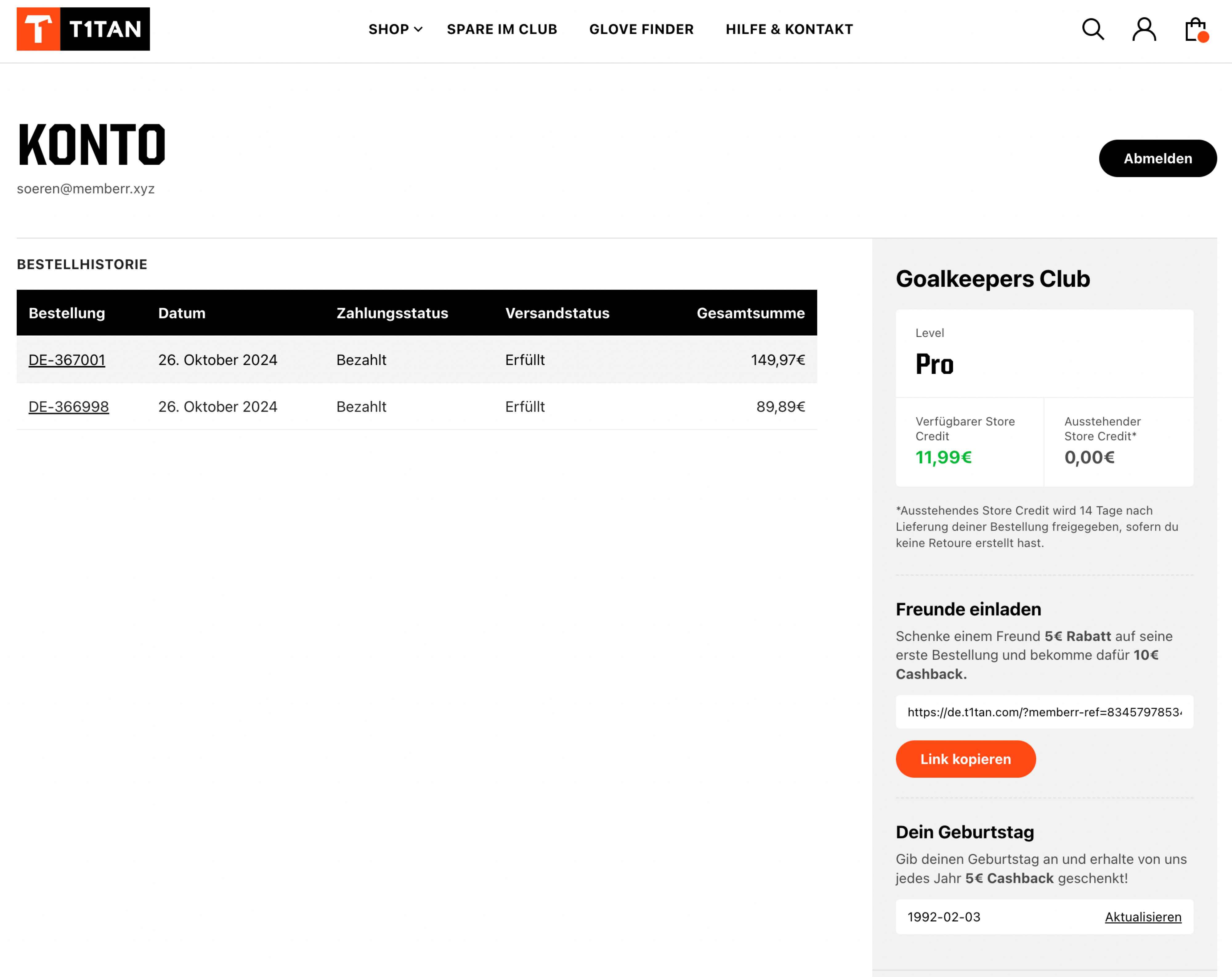
Deep how-tos live in the docs: displaying store credit and redeeming store credit.
Campaigns vs ongoing cashback
Two different machines fill the same wallet:
- Cashback - a percentage of each order issued as store credit after purchase. Ongoing earn path. See cashback overview.
- Campaigns (airdrops) - one-time credit to a Shopify segment, often with an available-at date and optional expiry. Surgical retention media. See campaigns.
Do not confuse them. Cashback builds habit. Campaigns create urgency for a defined audience. Both need messaging; neither replaces the other.
Metrics that matter
Vanity ecommerce KPIs alone will not tell you if credit is working. Track the credit funnel:
| Metric | What it answers |
|---|---|
| Redemption rate | Of issued credit, how much gets spent? |
| Time to redemption | Is awareness the problem, or the offer? |
| AOV on redeeming orders | Do customers overspend the balance? |
| Repeat rate / lag to next order | Did credit pull the second purchase forward? |
| Outstanding liability | How much unredeemed credit sits on the books? |
A high issuance volume with low redemption is not growth - it is a communication failure (or an offer nobody wants). Aim to diagnose with lag and expiry, not only with “credits sent.”
Where memberr fits
memberr is for merchants who want store credit as a program, not a one-off refund button: automated cashback, campaigns, review rewards, storefront display, and analytics on the same balance Shopify already understands.
If you only need occasional manual credit, Shopify admin may be enough. If you want credit to replace blunt discounting across the lifecycle, you need issuance rules, surfaces, and measurement in one place - that is the product job.
Further reading: store credit vs loyalty points, Loyalty 1.0 vs 2.0, store credit vs discounts for small stores.