
Cashback only works for merchants when it is store credit.
Customers still feel “I got money back.” You keep that money spendable only in your shop. Statement cashback and third-party wallets leak the reward off-site. Coupons cut the current ticket. Points hide the value. Payout-as-credit is the closed loop.
In memberr, cashback is not a second currency glued onto store credit. Cashback issues store credit as a percentage of the order after purchase. That is the product.
Cashback vs coupons vs points
| Incentive | When cost hits | Where value can spend | Customer clarity |
|---|---|---|---|
| Coupon /% off | This order | Anywhere (habit of waiting) | High |
| Points | On redemption (rules you set) | Your catalog (after conversion) | Low-medium |
| Statement cashback | After purchase | Outside your store | High |
| Cashback as store credit | On redemption | Your store only | High |
The loyalty loop is simple: buy → earn credit → return → earn again. Full-price purchase today; deferred, closed-loop reward tomorrow.
Why payout-as-credit changes the economics
You collect the order total now. Liability appears as credit. Cost crystallizes when (and if) the balance is redeemed - often on a larger basket. That is why credit programs can feel like a “smaller” discount than the coupon they replace. For small-store margin framing, see store credit vs discount codes. For incrementality and holdouts, see delayed credit vs upfront discounts.
Rates, delay, expiry, membership overrides
Design the earn path with three dials:
| Setting | Role |
|---|---|
| Percentage | e.g. 5% of €100 → €5 credit |
| Availability delay | Hold credit until after the return window |
| Expiry | Optional urgency on cashback credit |
Example rule: 5% base cashback, plus a bonus when the order clears €100, with credit available after 14 days. Memberships can raise the percentage for VIPs - see membership-dependent cashback.
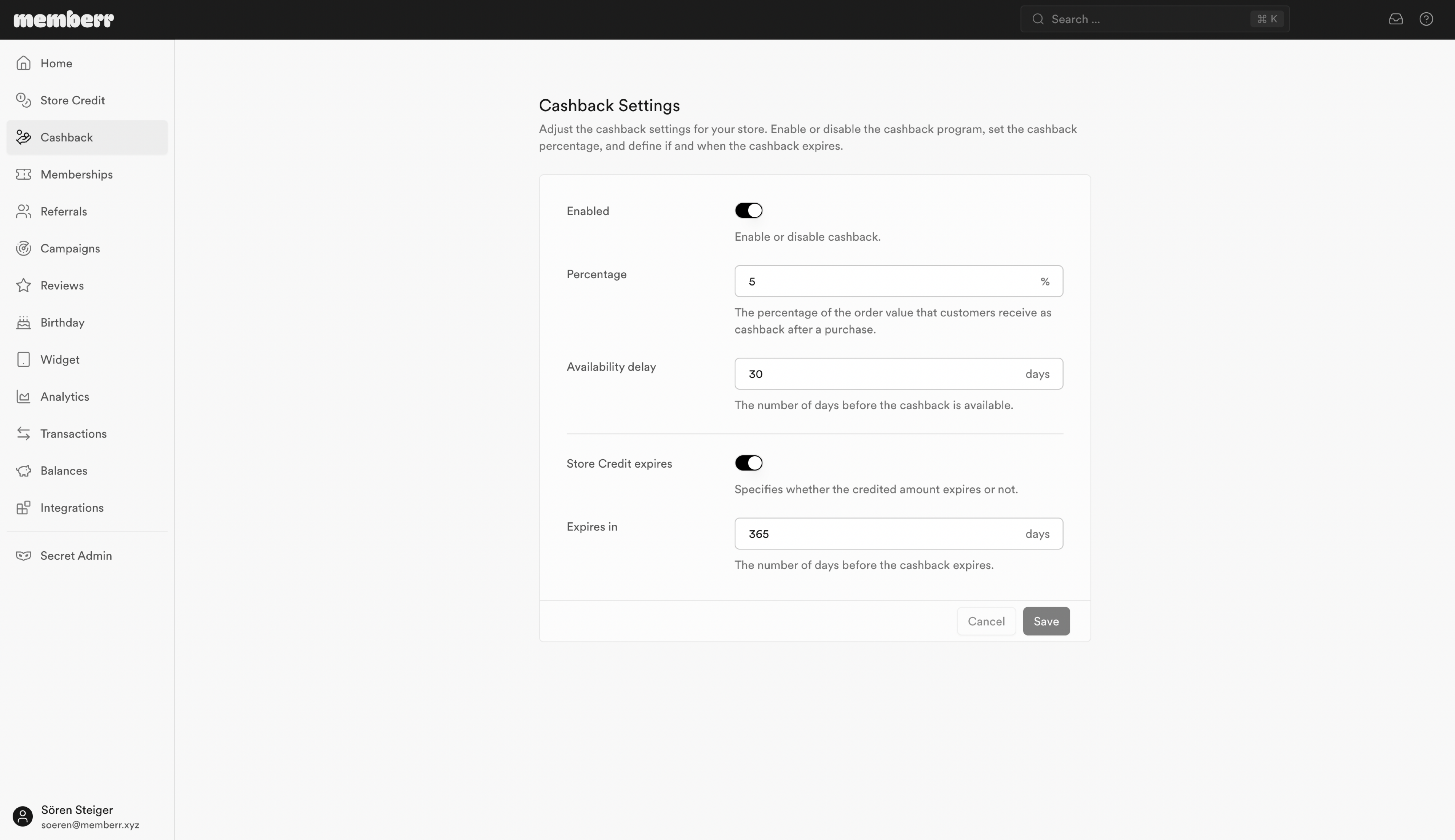

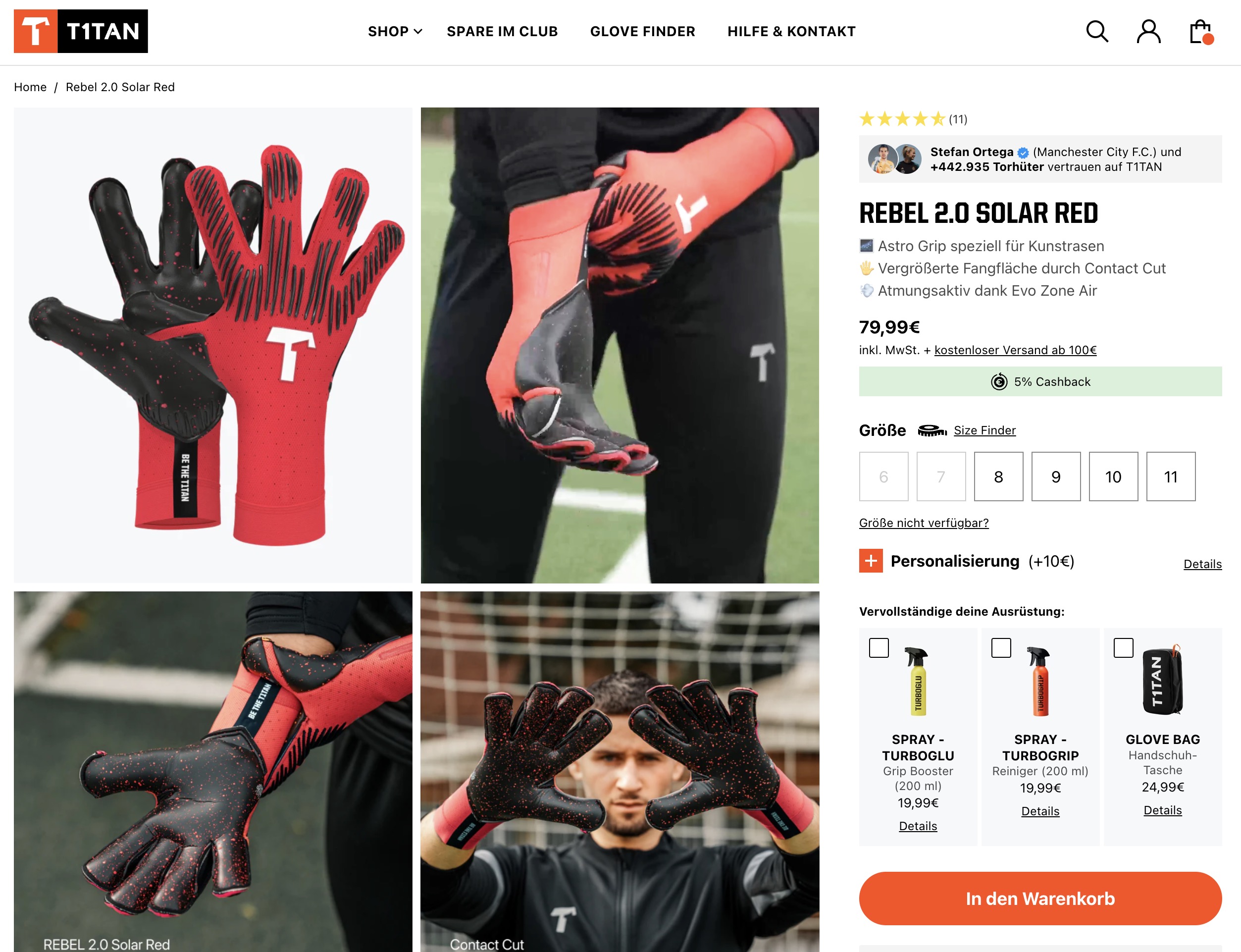
Docs: cashback overview, availability delay, expiration.
Earn beyond checkout
Cashback is the ongoing purchase earn path. Other actions can fill the same wallet:
- Reviews (store credit for reviews)
- Referrals
- Segmented campaigns / airdrops (store credit campaigns)
- Birthday or tier-reached bonuses via memberships
Keep one currency. Change the reason you issue it.
Double-discount traps
Common failure modes:
- Sitewide 20% off plus 5% cashback on the discounted total (or worse, stacking that feels like free money)
- Cashback on already heavily discounted SKUs without exclusions
- Campaign credit landing on customers who just used a deep coupon
- No delay - credit spends before returns settle
Set exclusions, delay past the return window, and decide whether campaign credit and cashback can stack. Margin lives in those rules.
Launch checklist
- Enable cashback and set a conservative% (quickstart)
- Set availability delay and optional expiry
- Place PDP / cart display so earning is visible
- Confirm redeem path at checkout
- Wire Klaviyo (or your ESP) for issued / expiring events
- Exclude problem collections if needed
- Run a small cohort before going storewide
What to measure
- Redemption rate of cashback credit
- Time from available → redeemed
- AOV on redeeming orders
- Repeat purchase rate vs pre-cashback baseline
- Issued credit vs attributed revenue (credit sent is not ROI)
Cashback as store credit is the match: immediate gratification for the customer, closed-loop economics for the merchant - one wallet, not two products glued together.